Blog entry by Darrel Creamer
The information repository is also a valuable asset for law enforcement and regulatory agencies. By having access to a centralized repository of details, these groups can more easily track down entities involved in illegal activities, such as money laundering or tax evasion. The ability to quickly access data about a company legal status search’s registration status, ownership structure, and financial history can meaningfully aid in investigations and enforcement actions.
One of the primary motivations behind the creation of the National entity database is to combat the issues of misinformation and opacity that have historically plagued corporate governance. In the past few years, high-profile cases of corporate fraud and mismanagement have highlighted the necessity for reliable and easily accessible data. The details repository serves as a tool for investors, buyers, and regulators to verify the legitimacy of entities, ensuring that stakeholders can make informed decisions based on dependable data.
In today's fast-paced digital economy, access to reliable and comprehensive data is more crucial than ever. The U.S. Entity Database, a repository of details about companies, entities, and other entities operating within the U.S., has emerged as an invaluable resource for entrepreneurs, industry observers, and policymakers alike. This article explores the significance of the U.S. Entity Details repository, its features, and its impact on various sectors.
Despite its numerous advantages, the National entity data reference point is not without its challenges. One of the most major concerns is the accuracy and completeness of the data. While the database aims to provide up-to-date data, discrepancies can arise due to delays in reporting or errors in data entry. Participants must exercise caution when relying on the data and consider cross-referencing with other sources to ensure accuracy.
As technology continues to evolve, so do the tools available for conducting entity searches. The Florida Division of Corporations has embraced digital innovation, making the search process not only easier but also more efficient. Mobile-friendly platforms and user-friendly interfaces ensure that entrepreneurs and backers can access vital information on-the-go.
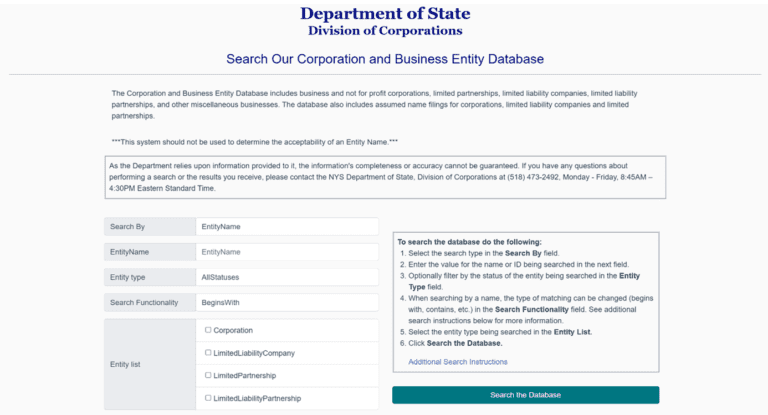
An entity search is a vital process that allows individuals and firms to gather information about recorded entities within a state. In Florida, this process is facilitated by the Division of Corporations, part of the Department of State. The entity search offers vital information, including the name of the enterprise, its registration status, the names of its officers, and its filing history. This details is key for anyone looking to engage in company dealings, partnerships, or investments.
Researchers and academics benefit meaningfully from the USA Entity Data resource as well. The wealth of data available can be leveraged for various studies, ranging from economic patterns to the impact of legislation on operational activities. By analyzing the data, industry observers can gain findings into the overall health of the economy, the expansion of specific industries, and the effectiveness of government policies. This details can be instrumental in shaping future legislation and business name registry search practices.
In an era where technology plays a important role in operational activities, the Wyoming Entity Search exemplifies how digital tools can improve openness and ease of access. By providing a user-friendly platform for accessing vital business data, the state empowers individuals and firms to make informed decisions.
The National entity database is built on advanced technology, utilizing cloud-based solutions and strong cybersecurity measures to protect sensitive data. The information repository is expected to be regularly updated to reflect real-time changes in company statuses, ensuring that the details remains dependable and reliable. This commitment to data integrity is vital, as firms and individuals alike rely on the data repository for critical informed choices processes.
However, the implementation of the National entity data repository is not without its challenges. Concerns regarding data privacy and security have been raised, particularly in light of increasing cyber threats. Ensuring that sensitive data is protected while maintaining openness will be a delicate balancing act for the bodies responsible for managing the database. Stakeholders will need to collaborate to establish solid security protocols that safeguard data from unauthorized access while still enabling for public scrutiny.
One of the primary purposes of the U.S. Entity Database is to improve visibility in business entity details search operations. By making information readily available, the database helps prevent fraud and ensures that buyers can make informed decisions. For instance, a potential investor can easily access the financial health and operational history of a company before committing capital. This visibility is particularly important in an era where trust in companies is paramount.